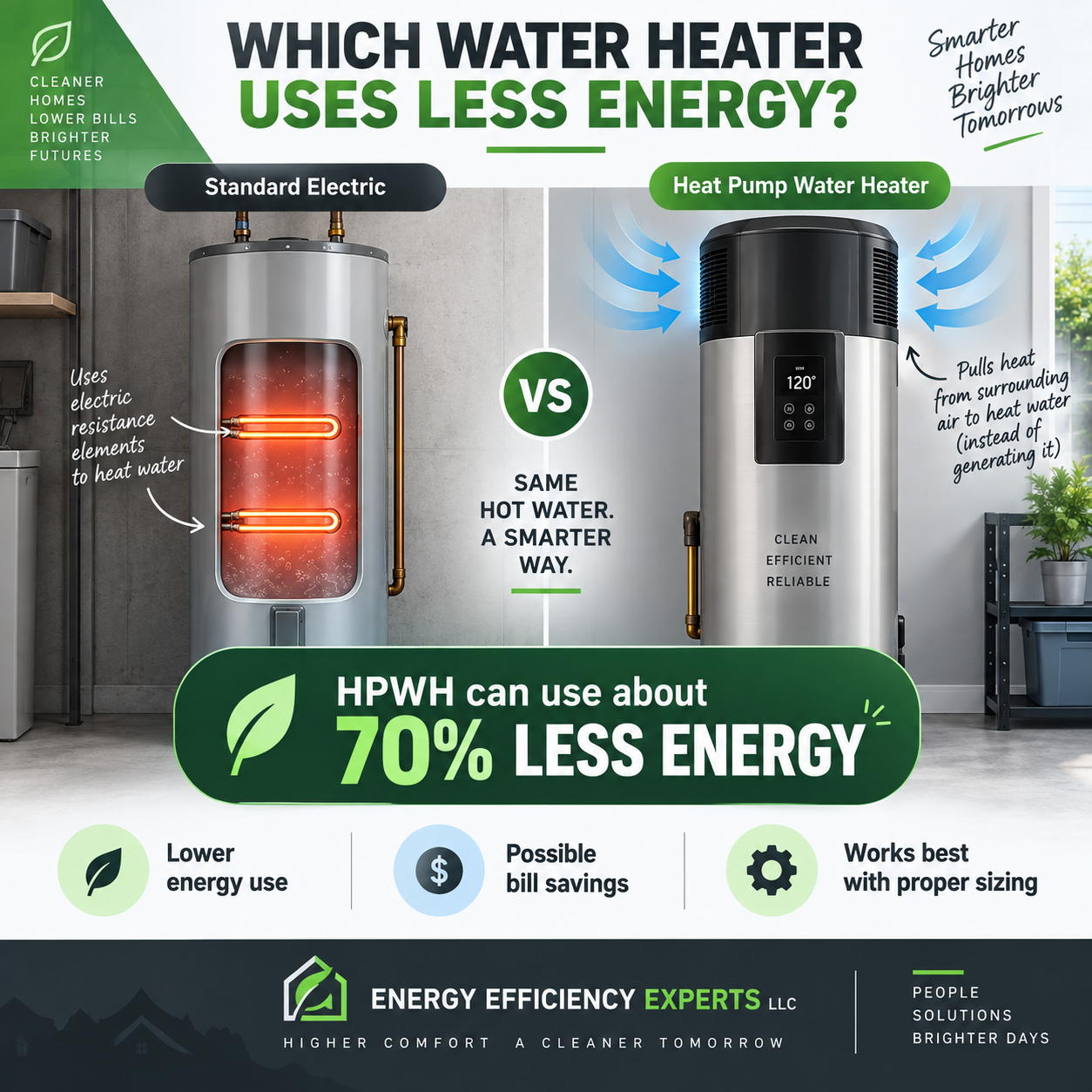
If you currently have a standard electric storage water heater, a heat pump water heater can be one of the largest efficiency upgrades available for domestic hot water.
The difference is how the heat is produced. A conventional electric resistance water heater sends electricity through heating elements inside the tank. Those elements become hot and transfer that heat into the water.
A heat pump water heater, often called an HPWH or hybrid water heater, uses electricity to operate a small heat-pump system. Instead of generating most of its heat directly, it pulls heat from the surrounding air and transfers that energy into the tank. Many models can also use electric resistance elements when hot-water demand is unusually high.
The efficiency difference is significant. ENERGY STAR states that certified heat pump water heaters use about 70 percent less energy than a standard electric water heater. ENERGY STAR also estimates that a household of four can save roughly $550 per year under its national energy-cost assumptions.
That does not mean every homeowner will save exactly 70 percent on the water-heating portion of the bill. Actual savings depend on several factors, including the old water heater, household hot-water use, local electric rates, the temperature of the installation space, equipment size, and how often the unit operates in heat-pump versus electric-resistance mode.
Location also matters. HPWHs need an appropriate amount of surrounding air and typically work best in spaces such as basements, garages, or utility areas that remain within the manufacturer's operating-temperature range. Because they remove heat and moisture from the surrounding air, they can provide a small cooling and dehumidifying effect in that space.
There are tradeoffs. Heat pump water heaters generally cost more upfront than basic electric tanks and can recover hot water more slowly in the highest-efficiency mode. Proper sizing and installation are important.
For homeowners who already have electric resistance water heating, however, the energy-saving potential is substantial. Before replacing a failed tank with the same technology, it is worth comparing an ENERGY STAR certified heat pump model and checking current utility, state, or income-qualified incentives that may reduce the installation cost.
Comments (0)
No comments yet — be the first!