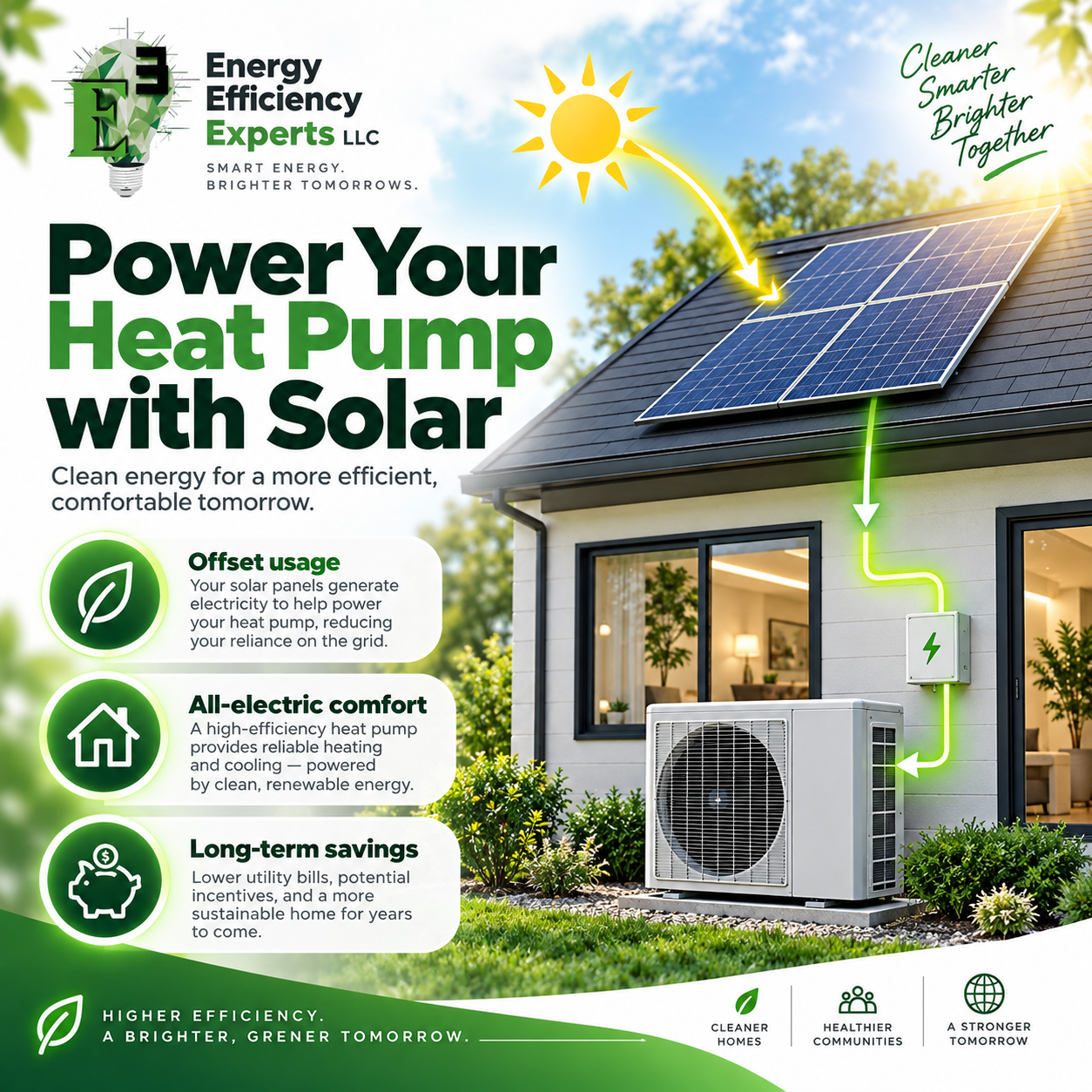
Air source heat pumps and rooftop solar solve two different problems, which is exactly why they can work so well together.
A heat pump provides heating and cooling by moving heat rather than creating it through electric resistance or combustion. Modern cold-climate air source heat pumps can operate efficiently in New York winters while also providing air conditioning in summer. According to the U.S. Department of Energy, heat pumps can use substantially less electricity for heating than electric resistance systems.
Solar panels, meanwhile, generate electricity. When a home switches from oil, propane, or another fuel to a heat pump, some of the energy that used to arrive by truck or gas line is replaced by electricity. A solar system can offset part of that new electrical consumption over the course of the year.
That does not mean the heat pump runs directly from the solar panels every minute. Solar production changes by time of day, season, roof orientation, shading, and weather. The home remains connected to the electrical system, and the financial result depends on utility rates, net-metering or billing rules, and how much electricity the solar array produces compared with the home's annual use.
The best projects start with the building itself. Air sealing and insulation reduce the amount of heating and cooling the house needs. That can allow a smaller heat pump to do the job and can reduce the amount of solar generation needed to offset the home's electricity use.
System sizing is also critical. Oversized or poorly designed heat pumps can sacrifice comfort and efficiency. Solar should be modeled using realistic post-upgrade electricity consumption, not just the home's old electric bills before electrification.
Homeowners should also consider electrical service capacity, backup-heating strategy, equipment location, and available incentives. In New York, heat-pump and solar incentives are generally administered through different programs and utilities, so eligibility should be checked before contracts are signed.
When these pieces are coordinated, the combination can be compelling: weatherize the house, use an efficient heat pump for heating and cooling, and use solar to produce a portion of the electricity the home consumes. It is a whole-home strategy rather than a single-product upgrade.
Comments (0)
No comments yet — be the first!